In the ever-evolving world of residential bathroom remodeling, lighting plays a crucial role. But determining the correct width for an above-mirror light bar is often overlooked or misunderstood, leading to either poor illumination or awkward aesthetics. As an architect and bathroom-spec enthusiast with over a decade of experience, I’m here to share practical guidance grounded in functional design principles, industry recommendations, and installation know-how.
We’ll explore key themes including mirror types and their functional decisions, sizing rules tied to lighting layouts, ideal placement heights, and spacing in relation to sconces. References from the National Kitchen & Bath Association (NKBA), lighting brands like Golden Lighting and Lumens, as well as expert insights from glaziers and electricians—essential collaborators in the process—will make this a comprehensive practical architecturelab.net guide.
Understanding Mirror Types as Functional Decisions
Before diving into the width specifics of light bars, it's critical to step back and consider the mirror type itself. This is not just about style or aesthetics; shape, storage options, mounting methods, and integrated lighting significantly influence the final lighting design.
- Shape: Rectangular, oval, round, octagonal—all shape choices impact light distribution. For example, round mirrors can be charming but pose challenges for consistent task lighting. Storage: Medicine cabinets or mirrors with built-in storage require different mounting depths and may impact wiring routes for hardwired LED setups. Mounting: Wall-mounted vs. recessed vs. framed. Each affects how the light bar can be anchored and spaced. Lighting: Some mirrors come with integrated LED strips or hardwired illumination controlled by electricians, while others rely entirely on external fixtures like above-mirror light bars.
Choosing the mirror type first empowers better decisions about light bar width and placement—since the mirror defines your lighting limits and goals.
The Fundamental “Above Mirror Light Bar Width Rule”
One principle stands out above all: your above mirror light bar width should be roughly two-thirds to three-quarters the width of the mirror. While the industry has some variations, this is a sweet spot that balances functionality and aesthetics without overwhelming the wall.
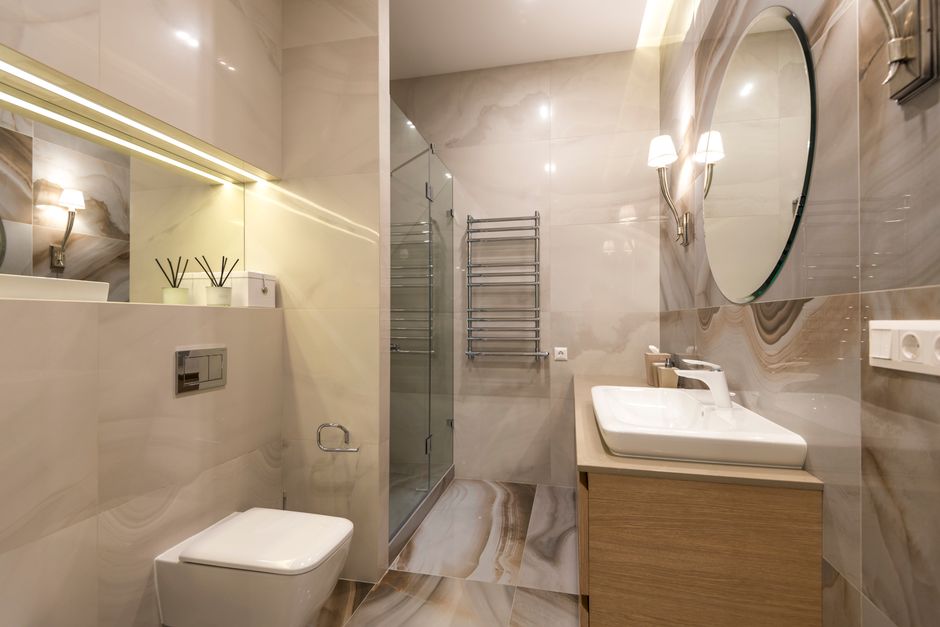
Contrary to some simplistic advice floating online or from trend-chasing vendors, the “one third mirror width light” is usually too narrow. This leads to insufficient horizontal light spread and shadows along the edges, especially problematic for grooming tasks that demand uniform illumination.
On the flip side, an excessively wide fixture—what many call a vanity light bar too wide—can look cluttered and interfere with flanking sconces, if any. The NKBA stresses harmony between fixtures and encourages allowances for sconces when included.
Why Not Just Match Mirror Width?
Lighting designers and electricians warn against sizing the bar exactly to mirror width because:
- The light’s effective beam angle and mounting height create diffusion zones that extend past the fixture size. Hardware elements and mounting plates require a small margin beyond mirror edges. Sconce installations on either side need clearance to avoid visual crowding.
For example, a 36-inch wide mirror benefits from a 24” to 27” light bar. Golden Lighting fixtures often cater to these common sizes, offering bars in 18”, 24”, and 30” increments. Lumens’ online catalogs list these sizes explicitly for above-mirror task lighting.
Placement Heights and Sconce Spacing Considerations
Height placement is crucial not only for illumination uniformity but also for fixture width perception.
Placement Height (from Vanity Surface) Recommended Range Comments Above Mirror Light Bar 75 to 80 inches from floor (or 4 to 6 inches above mirror) Balances glare and shadow casting on face Sconce Lights (if flanking mirror) 60 to 66 inches (center of fixture) Creates vertical light to complement task lightingThe spacing between the light bar and sconces should be sufficient so neither feels cramped. For example, if your mirror is 36” wide with sconces on both sides requiring 6” clearance each, an above mirror light bar around 24-27” wide fits well without dominating or crowding.
Coordination Tip:
Always communicate with your electrician and glazier during the design phase. The electrician will verify proper hardwired feeds—especially for LED-integrated mirrors and split circuits for sconces and light bars—while the glazier must accommodate mirror mounting that doesn’t interfere with lighting placement or wiring routes.
Task Lighting versus Ambient Lighting: What the Width Should Support
Above-mirror light bars primarily serve as task lighting. This means their width and lumen output should target eliminating facial shadows, offering consistent color rendering (CRI 90+ recommended), and achieving 75 to 150 footcandles on the face surface.
Ambient lighting, often supplied by ceiling fixtures or wall sconces, is less directional and doesn’t require the same narrowly focused beam spread.
- Task lighting requirements: focused, shadow-minimizing, high CRI light along mirror width Ambient lighting requirements: broader spatial illumination that supports general visibility and mood
To accommodate task lighting effectively, an above mirror light bar should extend wide enough to cast uniform light across the entire width of the mirror. Having it too narrow leaves edges darkened, affecting grooming precision. The slightly shorter width than mirror width also allows sconces to fill in shadows with softer side illumination, completing a balanced lightscape.
Lessons from the Field: Glazier and Electrician Collaboration
From decades of experience, here are practical insights involving your fellow pros:

- Glaziers rely on finalized dimensions for templating and installing plate glass mirrors. If the light bar width isn’t fixed early, delays and costly rework can ensue. They appreciate specs that clearly identify clearances around glass edges to avoid sealing failures in humid environments. Electricians emphasize the importance of early coordination of wiring feeds, especially for hardwired LED mirrors and above-mirror light bars. They caution against last-minute fixture swaps that can disrupt circuit loads or require relocation of outlets and switches.
Typically, if you’re specifying an integrated LED mirror plus sconces, the electrician will recommend a separate feed for the above-mirror light bar positioned to align perfectly with the fixture chosen by lighting vendors like Golden Lighting or from curated selections at Lumens.
Final Recommendations and Quick Verdict
- Above mirror light bar width rule: Target two-thirds to three-quarters of the mirror width. Height placement: 4-6 inches above mirror, approx. 75 to 80 inches from floor. Sconce spacing: Ensure at least 6 inches clearance on sides to avoid crowding. Lighting role: Task lighting—not ambient—guides width choices. Sales traps: Avoid marketing gimmicks that blur backlit mirror vs. front-lit vanity bars. Collaborate early: Coordinate with glazers and electricians to confirm dimensions, mounting, and wiring plans.
Verdict: Demister yes. Dashboard maybe. Stick to tried-and-true widths instead of chasing trends. Oversized vanity light bars hurt fixture balance and user function.
References and Resources
- National Kitchen & Bath Association (NKBA) - Design guidelines and lighting recommendations. Golden Lighting - Classic and task-oriented bathroom lighting fixtures. Lumens - Curated selections of bathroom light bars and LED mirror lighting.
Choosing the right above-mirror light bar width may seem trivial, but it’s a subtle driver of user satisfaction and bathroom performance. Use these rules and insights, and you’ll have a winning lighting layout that works, year after year.